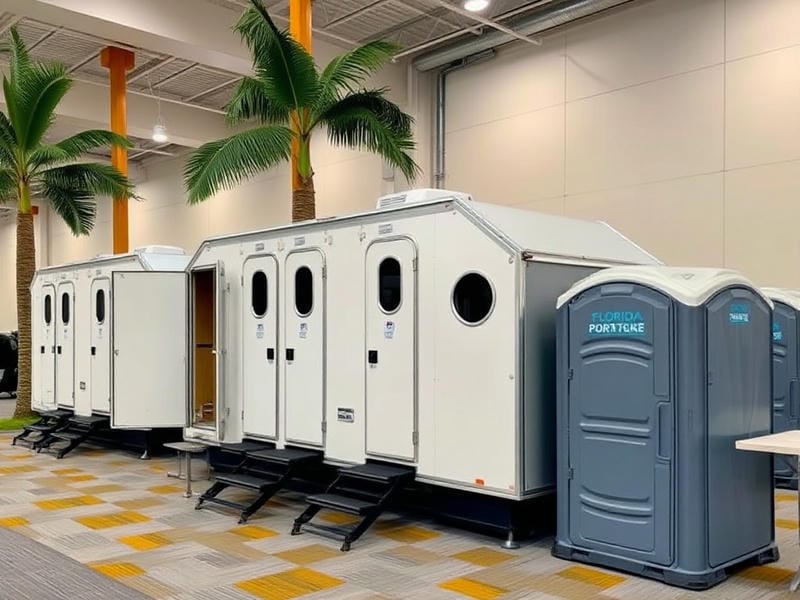
Portable Restroom Rentals Help Reduce Environmental Impact Through Sustainable Waste Management
Posted by on 2024-10-14
Overview of portable restrooms as a solution for reducing water usage and minimizing waste.
In the ongoing quest for sustainable living, one of the significant challenges we face is managing water usage and minimizing waste. Portable restrooms have emerged as a surprisingly effective solution in this regard, offering an innovative approach to reducing environmental impact through sustainable waste management practices.
At first glance, portable restrooms might seem like a temporary convenience rather than a long-term solution. However, these units are designed with efficiency and sustainability at their core. Traditional restroom facilities often consume large quantities of water—an increasingly precious resource—due to frequent flushing and cleaning requirements. On the contrary, portable restrooms are engineered to operate with minimal or no water use, thanks to advanced waste disposal technologies that include vacuum systems and chemical treatments that break down waste efficiently.
Beyond conserving water, portable restrooms contribute significantly to minimizing environmental impact through effective waste management strategies. Modern portable restroom units are equipped with advanced containment systems that prevent leaks and spills, ensuring that human waste is safely managed without contaminating local ecosystems. This containment capability is particularly crucial in outdoor events or construction sites where access to traditional sanitation infrastructure may be limited.
Moreover, the materials used in constructing these portable facilities are often chosen for their durability and recyclability. Many manufacturers prioritize using recycled plastics or other eco-friendly materials in production, further enhancing the sustainability profile of these units.
The shift towards portable restrooms also supports broader initiatives aimed at promoting circular economies within communities. By reducing dependency on fixed plumbing systems—which can be costly and resource-intensive—portable restrooms offer a flexible alternative that aligns with the principles of reduce, reuse, and recycle.
Portable restroom rentals provide more than just convenience; they represent a strategic approach to addressing some of our most pressing environmental challenges. As we continue to seek solutions for sustainable living amidst growing urban populations and diminishing natural resources, embracing such innovative ideas becomes not only advantageous but essential.
In summary, while often overlooked as mundane necessities at concerts or festivals, portable restrooms play a pivotal role in promoting environmental stewardship by enhancing water conservation efforts and implementing responsible waste management practices. Their potential extends far beyond mere functionality—they symbolize an important step toward achieving greater ecological balance through thoughtful innovation and conscientious design choices.
Examination of eco-friendly technologies used in modern portable restrooms, such as composting toilets and solar-powered units.
In recent years, the growing awareness of environmental sustainability has prompted significant advancements in various sectors, including sanitation. One area where eco-friendly innovations are making a substantial impact is in portable restroom rentals. These modern conveniences are increasingly being designed with the environment in mind, utilizing technologies such as composting toilets and solar-powered units to reduce their ecological footprint.
Traditional portable restrooms often rely on chemical treatments and non-biodegradable materials, contributing to pollution and waste. In contrast, eco-friendly portable restrooms employ sustainable waste management practices that align with environmental goals. Composting toilets are a prime example of this shift towards green technology. By using natural processes to break down human waste into compost, these toilets not only minimize water usage but also produce valuable organic material that can be used to enrich soil.
Solar-powered units further enhance the sustainability of portable restrooms by harnessing renewable energy sources. These units often come equipped with solar panels that provide electricity for lighting and ventilation systems, reducing reliance on fossil fuels and minimizing carbon emissions. The integration of solar power into restroom facilities illustrates a commitment to reducing energy consumption while maintaining functionality and comfort for users.
The adoption of these technologies in portable restroom rentals offers several environmental benefits. First and foremost, they help conserve water—a critical resource facing increasing scarcity worldwide. Composting toilets can operate without water or require significantly less than traditional flushing systems, thus conserving thousands of gallons annually.
Moreover, by opting for solar-powered units, event organizers and construction companies can decrease their overall environmental impact. This choice not only enhances their reputation among environmentally conscious consumers but also sets a precedent for other industries to follow suit.
Furthermore, sustainable waste management practices contribute to reducing landfill burden. By transforming human waste into compost rather than disposing of it as refuse, there is less need for landfill space—a crucial consideration given global concerns about overflowing landfills and their associated hazards.
In conclusion, the evolution of eco-friendly technologies in portable restroom rentals represents a promising step toward sustainable sanitation solutions. Through composting toilets and solar-powered units, these modern facilities offer effective ways to manage waste responsibly while minimizing environmental harm. As society continues to prioritize sustainability, these innovations illustrate how even essential services like sanitation can evolve to support a greener future—one responsible flush at a time.
Discussion on the role of sustainable waste management practices in mitigating pollution and conserving resources.
In an era where environmental consciousness is no longer optional but imperative, the role of sustainable waste management practices in mitigating pollution and conserving resources has taken center stage. One innovative avenue that embodies this approach is the use of portable restroom rentals. While these may seem like a minor component in the grand scheme of environmental conservation, they play a significant role in reducing environmental impact by employing sustainable waste management techniques.
Portable restrooms, commonly seen at outdoor events and construction sites, are more than just convenient facilities; they represent a strategic intervention in managing human waste sustainably. Traditional restroom facilities require substantial water resources for flushing and maintenance, contributing to resource depletion and increased wastewater generation. In contrast, portable restrooms operate with minimal or no water usage, significantly lowering their ecological footprint.
The design and technology behind modern portable restrooms have evolved to address environmental concerns actively. Many companies now offer eco-friendly options equipped with biodegradable chemicals for waste treatment, which prevent harmful substances from entering soil and waterways. This innovation ensures that when waste is eventually processed, it has a reduced impact on the environment.
Furthermore, these units are often serviced by companies using environmentally friendly practices. The collection and transport of waste are conducted efficiently to minimize carbon emissions. Waste from portable restrooms is typically taken to treatment facilities designed to process it safely and convert it into usable products like biogas or fertilizers. This closed-loop system exemplifies the principles of a circular economy — reducing waste through recycling and repurposing.
Beyond pollution mitigation, portable restrooms also contribute to conserving vital natural resources such as water. By drastically reducing the need for water consumption compared to traditional toilets, these solutions help preserve this precious resource crucial for sustaining life on Earth.
Additionally, adopting portable restroom solutions can lead to broader societal benefits by raising awareness about sustainable practices among users. Events or workplaces that prioritize environmentally friendly options signal their commitment to sustainability, encouraging individuals who interact with these systems to consider their own environmental impacts.
In conclusion, while often overlooked in discussions about sustainability, portable restroom rentals exemplify how practical solutions can lead to meaningful environmental benefits. Through reduced water usage, minimized pollution risk, efficient waste treatment processes, and promotion of eco-conscious behaviors among communities, they demonstrate how sustainable waste management practices can mitigate pollution while conserving essential resources. As we continue striving toward more sustainable futures, embracing such innovative approaches becomes not only beneficial but necessary for ensuring our planet's health and longevity.
Analysis of case studies showcasing successful implementation of portable restroom rentals in reducing environmental impact.
Portable restroom rentals have emerged as a pivotal solution in the quest for sustainable waste management and environmental conservation. As public events, construction projects, and outdoor gatherings continue to proliferate, the need for efficient sanitation solutions becomes paramount. Analyzing case studies that highlight successful implementations of portable restrooms reveals their potential to significantly reduce environmental impact.
One exemplary case study comes from the Glastonbury Festival in the United Kingdom, which has become a benchmark for eco-friendly event management. The festival organizers have made concerted efforts to minimize their environmental footprint by incorporating composting toilets into their sanitation strategy. These toilets not only offer convenience but also convert human waste into valuable compost. The initiative has resulted in a substantial reduction in water usage compared to traditional flush toilets, conserving thousands of liters at each event. Furthermore, the compost generated is used to enrich local soils, thereby closing the loop on waste and promoting sustainability.
Similarly, construction sites across urban landscapes are turning towards portable restrooms equipped with advanced waste treatment technologies. A notable example is a large-scale infrastructure project in San Francisco where contractors opted for solar-powered porta-potties with vacuum technology. This choice dramatically decreased wastewater production and energy consumption while ensuring compliance with stringent environmental regulations. The success of this implementation underscores how integrating innovative technology into portable restroom rentals can create tangible ecological benefits.
In rural areas lacking permanent sanitation infrastructure, portable restrooms provide an immediate and effective solution that aligns with sustainable practices. In Kenya, a non-profit organization introduced portable urine-diverting dry toilets in communities where water scarcity is prevalent. This approach not only addressed urgent hygiene needs but also facilitated nutrient recovery through separating liquid and solid waste components for agricultural use.
These case studies collectively demonstrate that beyond serving as mere conveniences, portable restrooms play an integral role in reducing ecological harm when implemented thoughtfully. They illustrate how organizations can leverage technological advancements and innovative strategies to tackle pressing environmental challenges associated with human waste management.
In conclusion, portable restroom rentals represent a promising avenue towards achieving sustainability goals across various sectors. By studying successful implementations worldwide, it becomes clear that these facilities do more than just meet sanitation needs—they contribute meaningfully towards conserving natural resources and fostering responsible stewardship of our planet's ecosystems. As awareness grows around environmentally sound practices, more industries will likely adopt such solutions as part of broader efforts toward sustainable development and ecological preservation.
Consideration of industry standards and regulations that promote sustainable practices in portable restroom rental services.
In recent years, the portable restroom rental industry has witnessed a significant transformation driven by an increased emphasis on sustainable practices. As society becomes more conscious of its environmental footprint, industries across the board are being called upon to adapt and innovate. Portable restroom rentals are no exception. Central to this evolution is the consideration of industry standards and regulations that promote sustainability, ensuring that these services do not merely provide convenience but also contribute positively to environmental stewardship.
At the heart of this shift is the recognition that waste management is a critical component of environmental impact. Traditional waste disposal methods associated with portable restrooms often posed challenges in terms of water usage and chemical runoff. However, as regulatory bodies and industry leaders have acknowledged these concerns, there has been a concerted effort to establish standards that mitigate negative impacts.
One key area where these standards make a difference is in water conservation. Advanced technology enables modern portable restrooms to function efficiently with minimal water use, incorporating features such as low-flow systems and recirculating flush mechanisms. Regulations now encourage or even mandate such innovations, reducing the strain on local water resources during large events or extended construction projects.
Moreover, sustainable waste management extends beyond just minimizing water consumption. The treatment and disposal of waste itself have been reimagined through new guidelines promoting environmentally friendly practices. For instance, many companies now prioritize using non-toxic chemicals for sanitation processes. These eco-friendly solutions break down naturally without harming ecosystems when disposed of properly, aligning with broader environmental goals.
Additionally, industry regulations often include criteria for material selection in restroom construction. By opting for recyclable materials or those derived from renewable sources, manufacturers can lessen the overall ecological footprint of their products. This approach not only supports recycling initiatives but also reduces dependency on finite resources.
It is also worth noting that sustainability in portable restroom rentals goes hand-in-hand with public health considerations—a factor underscored by regulatory frameworks. Ensuring sanitary conditions while minimizing environmental impact requires careful planning and compliance with established health standards. Companies that adhere to these regulations not only protect users but also contribute to community well-being by preventing pollution and disease transmission.
The role of industry standards and regulations cannot be overstated; they serve as both a guidepost and an impetus for innovation within the sector. By setting benchmarks for sustainability, they compel businesses to rethink traditional models and invest in greener technologies.
In conclusion, as we move towards a future where ecological consciousness shapes consumer choices across all sectors, portable restroom rental services stand at an important crossroads. The adoption of industry standards and regulations promoting sustainable practices indicates a promising path forward—one where convenience does not come at the expense of our planet's health. Through continued commitment to innovation guided by robust regulation, this industry can indeed help reduce environmental impact significantly while meeting essential human needs responsibly.
Evaluation of the economic benefits for businesses and event organizers when adopting environmentally friendly portable restrooms.
In recent years, the adoption of environmentally friendly practices has become increasingly important for businesses and event organizers worldwide. One specific area where this shift towards sustainability is becoming more evident is in the choice of portable restrooms. Traditionally overlooked as a minor detail, the selection of eco-friendly portable restrooms can actually yield significant economic benefits while simultaneously reducing environmental impact.
First and foremost, the operational cost savings associated with sustainable portable restrooms can be substantial. These modern facilities often utilize advanced waste management systems that minimize water usage—a crucial factor given the rising costs and scarcity of clean water globally. By incorporating features such as vacuum flush technology or waterless solutions, these restrooms significantly reduce water consumption compared to traditional models. This reduction not only lowers utility bills but also aligns with broader corporate responsibility goals aimed at conserving resources.
Moreover, eco-friendly portable restrooms often leverage renewable energy sources like solar panels to power ventilation systems and lighting. Such innovations further decrease reliance on non-renewable energy sources, offering additional cost savings in terms of electricity use. As energy prices continue to climb, these savings become increasingly relevant to maintaining a competitive edge in business operations.
Event organizers also stand to benefit economically by choosing green restroom options through enhanced brand reputation and customer satisfaction. In an era where consumers are more environmentally conscious than ever before, demonstrating a commitment to sustainability can differentiate a business from its competitors. By providing environmentally friendly amenities, event organizers appeal to this growing segment of eco-aware attendees who prioritize sustainability in their purchasing decisions.
Furthermore, businesses adopting sustainable practices may qualify for tax incentives or grants designed to promote environmental responsibility. Government programs often reward companies that invest in green technologies and infrastructure improvements with financial benefits such as tax breaks or subsidies. These incentives not only offset initial investment costs but also provide long-term financial advantages.
Lastly, investing in eco-friendly portable restrooms contributes positively to an organization's public relations strategy by highlighting its dedication to environmental stewardship. This proactive approach can enhance stakeholder relationships—ranging from customers and employees to investors—by showcasing a tangible commitment to reducing ecological footprints.
In conclusion, embracing environmentally friendly portable restrooms presents numerous economic benefits for businesses and event organizers alike. From operational cost reductions and increased consumer appeal to potential government incentives and improved public perception, the advantages are clear-cut. As industries continue navigating toward sustainable futures amid mounting environmental challenges, making greener choices—even down to restroom facilities—can play an essential role in achieving both ecological preservation and economic prosperity.